
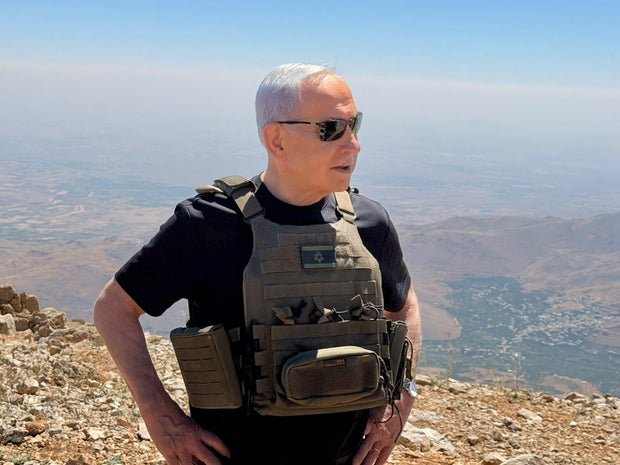
Tel Aviv — With the first Israeli election since the Oct. 7, 2023, Hamas attack just three weeks away, the country is grappling with conflicting accounts about whether Prime Minister Benjamin Netanyahu had warnings from regional allies that a massive attack was coming, even if there were no specifics on the timing or location.
Netanyahu has denied getting any warnings, and the fierce internal debate about it may be overshadowing a wider problem — with clear precedent — of overwhelming intelligence signals being misinterpreted or underestimated at the cost of thousands of lives.
Israel is not the only country to have failed to take action despite ample intelligence suggesting a catastrophic attack was imminent. The phenomenon has a name in intelligence circles: strategic intelligence failure. It happened 84 years ago at Pearl Harbor, and on Sept. 11, 2001.
Handout/Israeli government 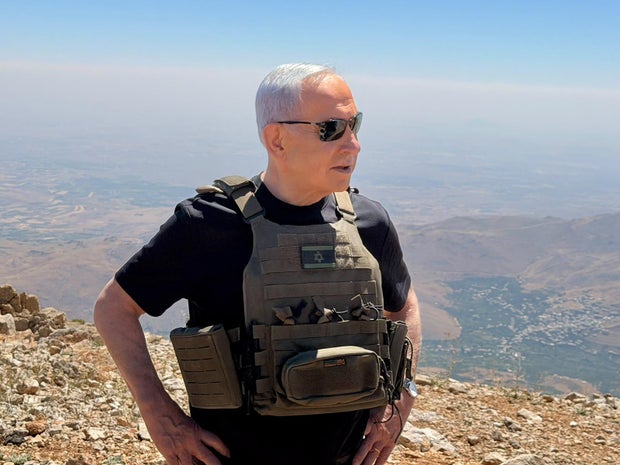
Israel had in its possession Hamas’ own secret plan for the attack a year before it occurred, according to Israeli officials. In the months and weeks before the invasion, Hamas both talked about it in public statements and shared videos showing them practicing for it.
In the hours leading up to the attack, Israeli intelligence agencies saw some Hamas leaders go underground and Hamas commandos gathering at different spots. Israel’s domestic intelligence agency, Shin Bet, was alerted to the fact that Israeli SIM cards that had been distributed to Hamas fighters were activated — a sign of their imminent intention to cross into Israel.
A female Israeli soldier stationed at the Gaza border had warned her commander for months that she had seen Hamas operatives making apparent preparations for an attack.
Yet, on the evening of Oct. 6, 2023, Israeli military and intelligence officials likely never imagined what was about to happen early the next morning, when thousands of Hamas militants stormed across the border in pickup trucks, on motorcycles and even by motor-powered hang glider to rampage through communities and military bases.
“There was a lot of information. They just didn’t understand it correctly,” Shlomo Mofaz, a former senior Israeli military intelligence official who now heads the independent Meir Amit Intelligence and Terrorism Information Center, told CBS News.
America’s intelligence failures
Before Japan launched its surprise attack on the U.S. Pacific Fleet in Pearl Harbor, as well as several other U.S. naval bases in the region, on Dec. 7, 1941, dragging the U.S. into World War II, there were signs of an impending strike.
U.S.-Japanese talks to avoid a clash had just broken down, and weeks earlier, the Japanese fleet had disappeared into the Pacific Ocean. Even as U.S. radar picked up over 180 Japanese aircraft on their way to Hawaii, American officers failed to understand what was happening.
U.S. Navy via AP, File 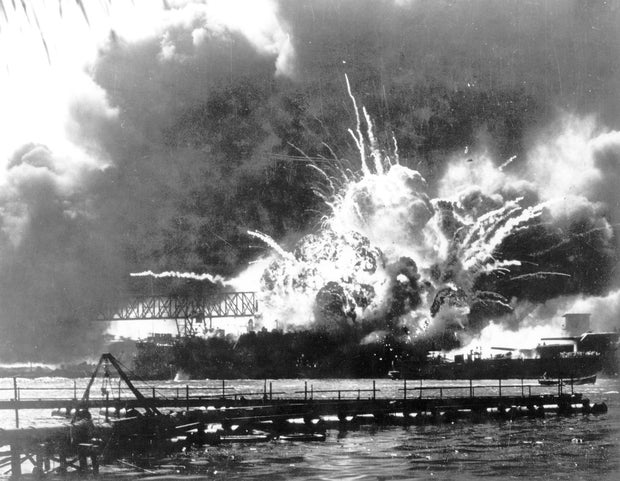
That’s due in part to an overriding belief at the time among the top American brass that Japan was focused on battles closer to its borders, and wouldn’t dare spark a war with the U.S.
Before the 9/11 attacks, U.S. intelligence agencies knew al Qaeda leader Osama bin Laden was planning something. They had noted suspicious individuals from the Middle East were learning how to fly planes, but not land them. But they never connected the dots.
It was, in the words of the 9/11 Commission, a catastrophic failure “of imagination.”
For decades, the U.S. had been concentrated on conventional threats posed by foes in a similar weight class, like the Soviet Union. Few had considered that small but determined terrorist groups like al Qaeda could cause such catastrophic damage, the commission said.
In all three cases, Pearl Harbor, 9/11 and Oct. 7, the stronger party failed to see that the weaker party wasn’t deterred, but rather determined to keep fighting by any means necessary.
Israel thought it could contain Hamas while devoting most of its resources to much clearer and more potent threats, such as Iran and the Lebanese militant group Hezbollah, former senior Israeli security officials have said.
“Even when they understood that Hamas was going to do something, it was never in the dimension and in the force that they eventually did,” Mofaz told CBS News.