
When a heat dome descended on Minnesota in mid-July, Duluth-based Canal Park Brewing Company had its air conditioning blasting. Then it cut out.
Faced with sweltering conditions, the business was forced to close for the day and halt outdoor patio service for three days to protect its servers from the soaring mercury.
“Where we are is a pretty big touristy kind of destination, so we make most of our money in the summer,” said Alex Niemi, a restaurant manager at the brewery, which offers small-batch beers and pub fare. “So yeah, it was a pretty big impact. Even just those couple of days, it kind of threw off our whole month.”
With July just setting a record as the hottest month ever recorded in the contiguous U.S., rising temperatures are increasingly taking an economic toll, from small businesses taking a financial hit to transit delays and power outages.
The main way heat waves hurt the economy is through weaker business productivity, Jeremy Porter, physical risk research director at climate risk modeling firm First Street, told CBS News.
“It’s the disruption of business as usual, whether it’s because of damaged infrastructure, power disruptions or reduced labor productivity,” he said.
A First Street analysis of nearly 30,000 business financial disclosures found that the third most common climate-related concern among companies was the impact of extreme heat on their workforce. The top two concerns focused on the impact of drought.
Not ready for the new normal
As climate change drives up temperatures, heat waves are having a particular economic impact in parts of the U.S. ill-equipped to deal with extreme heat, Porter said.
In those regions, businesses may not have the infrastructure, air conditioning or flexible work schedules necessary to operate during bouts of high heat. That can force businesses to shorten their hours of operation or even shut down for days.
“Heat waves are becoming more frequent. They’re becoming more persistent,” Porter said. “Where it becomes extremely problematic is in the Northwest, the Midwest and the Northeast — places that haven’t historically dealt with these heat levels and are not acclimatized to that type of risk.”
That was the case in Minnesota, where above-average July temperatures put Canal Park Brewing in a bind, Niemi told CBS News. “We don’t really get that many days where it’s above 90 here. So just having the consecutive days where AC was just kind of cranking full power, I think that’s what kind of shut it down.”
And for small businesses, even cranking up the AC can lead to outsized electricity bills, which are also rising as thousands of data centers sprout up to power artificial intelligence.
More destructive than other disasters
The National Oceanic and Atmospheric Administration defines heat waves as periods of unusually hot weather, typically lasting two or more days, during which temperatures exceed local historical averages.
As heat waves increase in frequency and severity, experts said they can inflict even more serious economic damage than other natural disasters, noting that periods of extreme heat tend to last longer than, say, a hurricane, tornado or flood.
Heat waves also often impact a wider geographic area than other natural disasters, which tend to be more localized, leading to more extensive business disruptions, Porter noted. Urban areas are especially vulnerable because they tend to trap heat and are highly concentrated in economic activity.
Recent heat waves across the U.S. have led to an estimated 0.6 percentage point loss in gross domestic product, according to a report by the insurance company Allianz.
“While wildfires can destroy a great deal of wealth locally, [they don’t] have as large an effect on GDP,” August Gudmundsson, an economist at global investment research firm Gavekal, said in an email, citing research from the University of California, Los Angeles, Anderson School of Management.
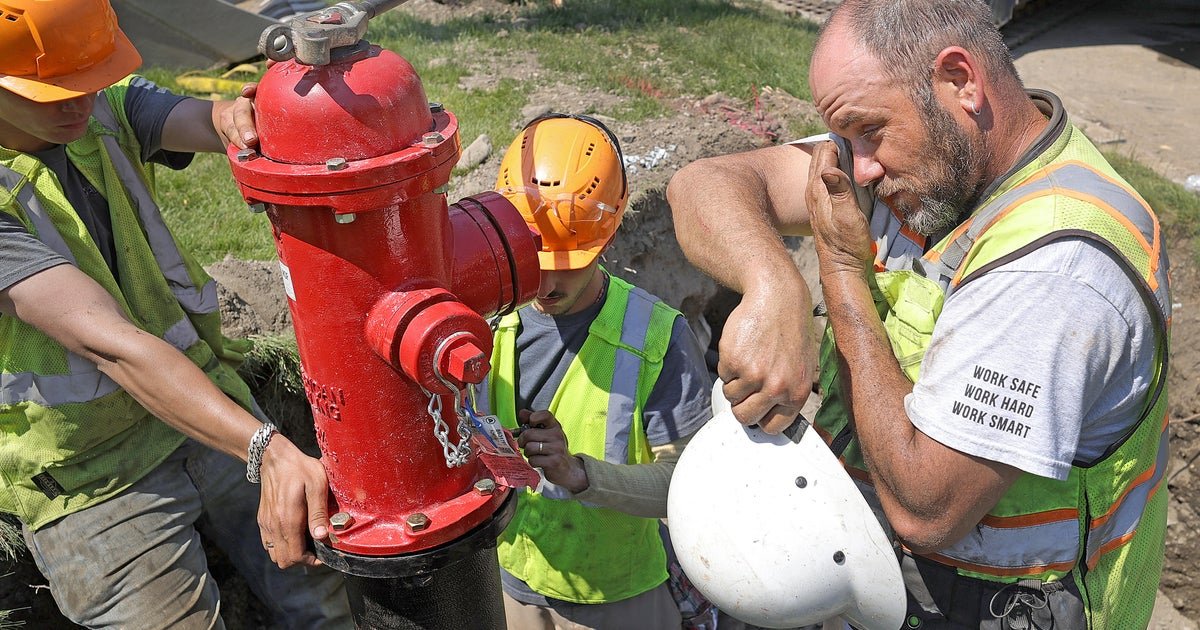
These hotter conditions are upping the ante for work-related disruptions. Workers in outdoor occupations, including construction, manufacturing and agriculture, are particularly at risk, Porter said.
Extreme heat killed 436 workers from 2011 to 2021, an average of 40 deaths a year, federal data shows. Research also suggests that heat-related mortalities are underestimated because death certificates often cite underlying conditions as the cause of death, rather than external factors such as the temperature.