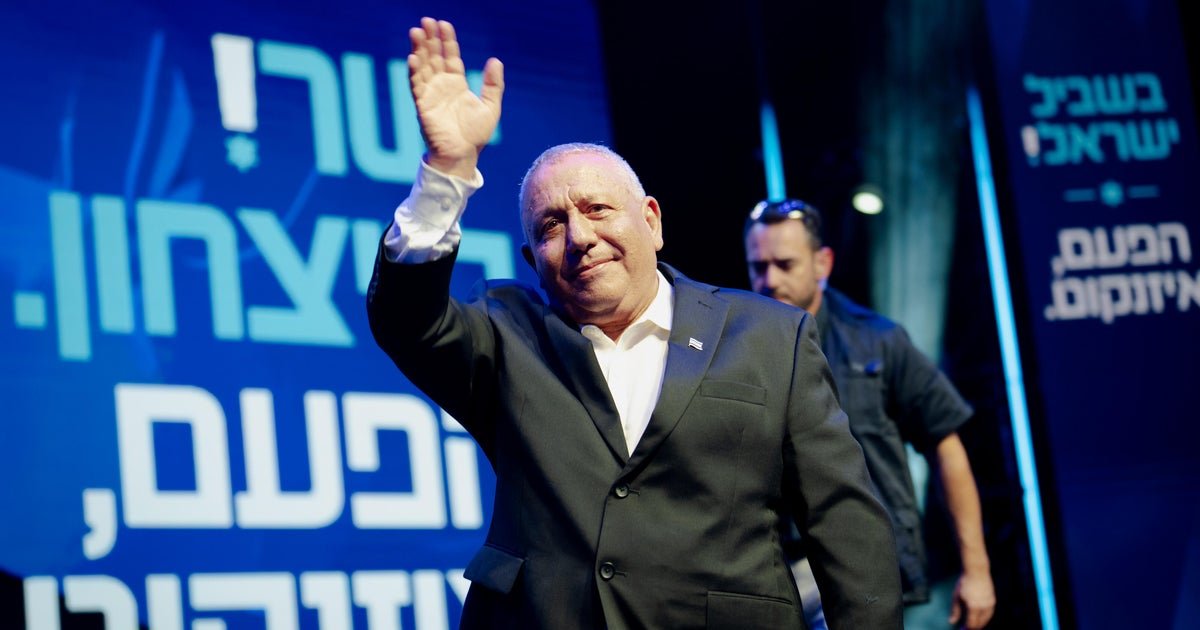
Israeli President Isaac Herzog said Saturday night that he was giving opposition candidate Gadi Eisenkot the first opportunity to form a governing coalition following elections on Oct. 27.
Eisenkot, a former military chief, ran as the main challenger to Prime Minister Benjamin Netanyahu, leading a bloc of parties seeking to oust Israel’s longest-serving premier.
Neither Eisenkot nor Netanyahu’s party won a clear majority in the vote. But in marathon discussions with the president this week, representatives from most of Israel’s main parties recommended Eisenkot be tasked with assembling a new government.
Herzog’s decision is a setback for Netanyahu, who has leveled allegations, so far without evidence, that some Arab countries interfered in the elections.
The acting director-general of the Central Elections Committee, Din Livne, said in a letter to a committee member on Thursday that “there is no basis to the claims regarding a systematic compromise of the integrity of the elections.”
Herzog’s announcement, which had been expected on Sunday, came shortly after Netanyahu called for a “national unity government” in a video statement and warned against “hastily swearing in a government with terrorist supporters” — an apparent reference to the Arab-led parties who have backed Eisenkot.
Netanyahu and his allies have repeatedly portrayed the Arab-led parties as a threat to national security. Eisenkot, however, has indicated a willingness to partner with them as long as they meet certain conditions, including agreeing to refer to Hamas as a terrorist group that needs to be destroyed.
Eisenkot’s party, Yashar, slammed the prime minister’s video with a statement posted on X and urged members of Netanyahu’s party, Likud, to disavow their alliance with “radical parties,” which is seen as a reference to some of the settler-linked and ultra-Orthodox parties in his religious-nationalist coalition.
The four parties that make up the main bloc opposing Netanyahu won 48 of the Knesset’s 120 seats. Netanyahu’s bloc won 53, while Israel’s Arab-majority parties had their highest turnout ever in Tuesday’s election, winning an unprecedented 19 seats.
Because neither Eisenkot’s nor Netanyahu’s blocs won a clear majority of the vote, they would need some support from the Arab parties to form a coalition government. The heads of the two largest Arab parties said they would be willing to help Eisenkot’s opposition bloc oust Netanyahu, though most of the Jewish-led parties that oppose Netanyahu vowed before the election not to rely on support from the Arab parties to form a government.
Once the new Knesset is sworn in — even without a new government decided on — Eisenkot’s bloc, along with the Arab parties, could begin passing laws given that they will control a majority in the parliament.
Netanyahu, whom President Trump endorsed enthusiastically, will remain in his post as a caretaker prime minister until a new government is formed. If the parties cannot negotiate to form a new coalition government, then the country would have to hold the election all over again, and Netanyahu would remain the prime minister in the interim.