CBS News is fact-checking President Trump’s speech on election security Thursday night, in which he raised new allegations regarding China’s access to U.S. voter data and claimed that the “deep state” in the U.S. intelligence community sought to “actively suppress and downplay” China’s actions. He also made accusations about voter registration fraud in the U.S.
Here are some of the claims and CBS News’ ratings and context for Mr. Trump’s statements:
False: Trump claims U.S. election system “falls catastrophically short” of standard where “cheating and interference are not just difficult, but virtually impossible.”
President Trump: “Every American deserves to know that when they cast their vote, that vote will be counted accurately in a system, and that is to make that system secure — one where cheating and interference are not just difficult, but virtually impossible. Unfortunately, the system we have today falls catastrophically short of that standard.”
Details:
- Officials have repeatedly said election infrastructure remains secure.
- The Cybersecurity and Infrastructure Security Agency, or CISA, said there was “no evidence of any malicious activity” affecting the integrity of the 2024 elections. CISA also said the 2020 election was “the most secure in American history,” with no evidence that voting systems deleted, lost or compromised votes.
- Georgia and Pennsylvania conducted audits of the 2024 general election and officials in both states confirmed the accuracy of election results.
By Layla Ferris
Lacks evidence: Trump claims voting machines “vulnerable and they’re easily compromised, and people within our government knew that.”
“They’re vulnerable and they’re easily compromised, and people within our government knew that.”
Details:
- This claim likely refers to a document declassified by the government that mentions voting machines and Venezuela. The intelligence community found Venezuela was trying to operationalize a hypothetical vulnerability in a voting system used in that country. That system is not used in the U.S. and Smartmatic, the company that makes the Venezuelan machine, is not involved in any voting machines in the U.S., with the exception of Los Angeles County.
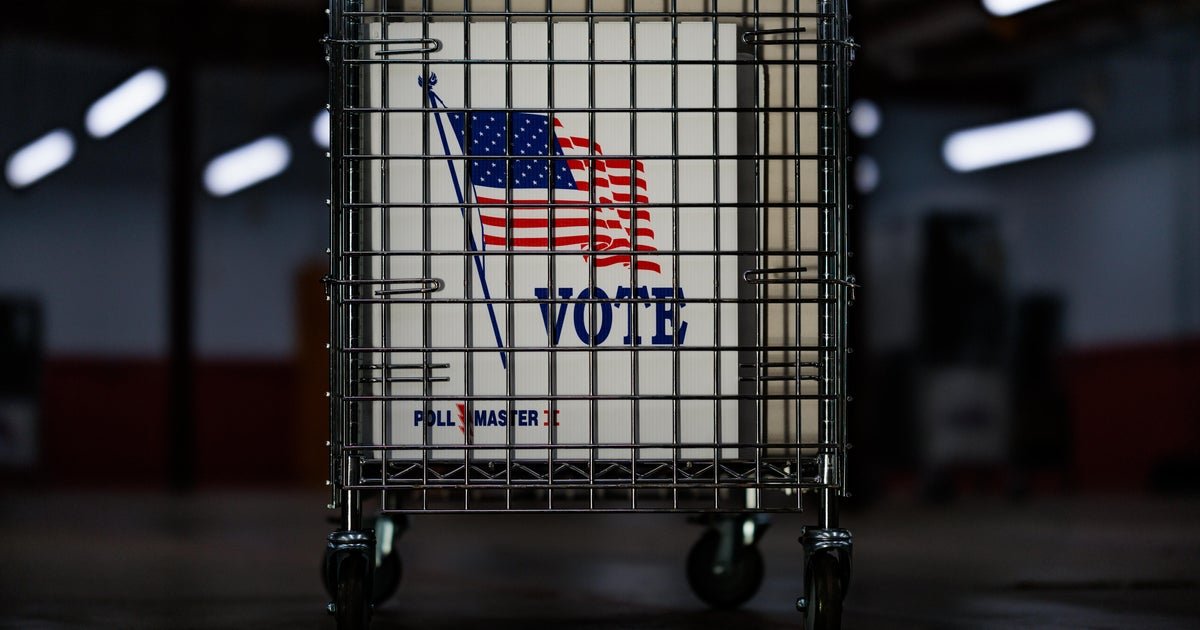
- Mr. Trump has also raised doubts about Dominion Voting Systems voting machines, which were used in 28 states in 2020, including the battleground states of Georgia and Wisconsin. In a 2022 review of Dominion Voting Systems by the Cybersecurity and Infrastructure Security Agency, CISA found vulnerabilities that it said could be exploited to gain control over the system’s operations under very specific conditions.
- One vulnerability involves a scenario under which an individual would have to physically access the voting machines and be able to technically modify files before uploading them to the larger system. But CISA said it found no evidence these vulnerabilities have been exploited in any elections.
- There are physical vulnerabilities that exist where elections are held, according to a 2023 Brennan Center report, which found that state and local officials have called for more funding to bolster physical security at their offices. But while many stress tests have been conducted on voting machine technology to find any flaws, Trump’s claim that voting machines are “easily compromised” and that the government knew that, is not backed up by CISA’s assessment.
- “Security researchers do find real weaknesses embedded in the code and operations of U.S. voting systems, just like they do with power grids, banks, and telecommunications, all of which share the same ‘critical infrastructure’ designation as elections. Finding a flaw and fixing it is a sign of a mature system, not a sign it’s broken,” wrote Geoff Hale of the Center for Democracy & Technology.
By Aaron Navarro
Exaggerated: Trump claims “hundreds of thousands of non-citizens and dead people” are “active on the voter rolls”
“Hundreds of thousands of non-citizens and dead people are listed and active on the voter rolls.”
Details:
- Election experts say votes cast on behalf of “dead people” are extremely rare, and the numbers are unlikely to affect the outcome of an election.
- For instance, the North Carolina State Board of Elections announced in April that it had identified “34,000 deceased individuals” on the state’s voter rolls. But the board also said that this “does not necessarily indicate that illegal votes were cast in their names.”
- Under very specific circumstances, however, some states will count the vote of a person who has died. According to the National Conference of State Legislatures, 10 states count an absentee ballot cast by a voter who died before Election Day, and Connecticut will count a deceased voter’s ballot if the individual was a member of the armed services.
- Michigan and 11 other states explicitly prohibit counting the votes of deceased individuals, “even if the voter cast an absentee ballot and then died before Election Day,” according to Secretary of State Jocelyn Benson.
- Colorado, Kansas and New York only allow counting a deceased individual’s vote if an investigation proves that the voter had cast a ballot and later died before Election Day.
- The phenomenon of non-citizens voting in U.S. elections is a rare occurrence and unlikely to change the outcome of an election. The Center for Election Innovation & Research concluded that non-citizens voting in U.S. elections “arise from misunderstandings, mischaracterizations, or outright fabrications” and once an investigation by an individual state’s secretary of state is concluded, “the number of alleged instances falls drastically.”
- Iowa Secretary of State Paul Pate revealed in March 2025 that the state had estimated 2,186 non-citizens registered to vote. But after a statewide audit, the number dropped to “277 confirmed non-citizens.” Of those, only 35 voted in the 2024 election.
By Ibrahim Aksoy