The name of an astronomer and mathematician from the ancient civilization has been discovered for the first time thanks to archaeologists’ transcription of mural symbols from Mayan ruins, Guatemala’s Ministry of Culture announced on Monday.
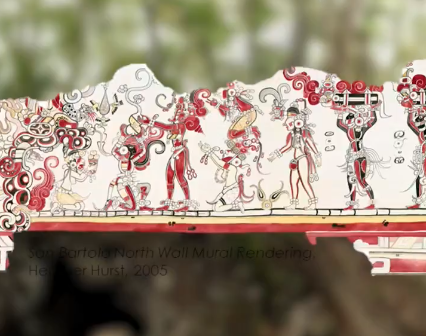
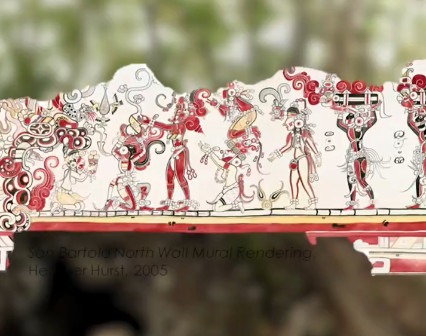
At the San Bartolo-Xultun archeological site on the Mexican border, drawings from 400 BC to 900 AD contained the term “White-chested Fox”.
Reporters were informed by Culture Minister Luis Mendez that researchers at Xultun had discovered a “complete mathematical and astronomical formula” written by Sak Tahn Waax, which means White-chested Fox.
According to Mendez, it is the sole piece of its kind credited to a mathematician from the Maya Classic era, which is regarded as the height of Mesoamerican civilization.
According to a statement from the ministry, the discovery was “made possible by the epigraphic analysis of more than 50 mathematical and astronomical microtexts written on the wall.”
Guatemala’s Ministry of Culture
In addition to determining the astronomer’s name, researchers identified calculations and tables that employ astronomical and calendrical units of time.
Researchers used drawings, photographs and scans of the inscriptions, which were later digitally enhanced, revealing 11 hieroglyphs that could finally be deciphered, the ministry said.
The glyphs appeared in “a context where art was intertwined with science, mathematics, astronomy and everyday life,” Mendez said.
The Maya civilization went into decline around 900 AD, until its collapse with the arrival of Spanish conquistadors at the turn of the 16th century.
Last year, the culture ministry announced archaeologists unearthed the remains of a Mayan city nearly 3,000 years old in northern Guatemala, with pyramids and monuments.
In 2024, an American doctoral student discovered a sprawling Maya city within a dense jungle in Mexico. Scientists and archaeologists have discovered ancient Mayan ruins by shooting lasers down from a plane to penetrate the dense jungle.