Washington — A federal appeals court denied the Trump administration’s request to lift a lower court’s order that blocked new rules for mail ballots before the midterms, the latest twist in a case that has already reached the Supreme Court.
In a nine-page opinion issued Thursday, a three-judge appellate panel in the First Circuit Court of Appeals said that the Trump administration failed to show that the new rule from the U.S. Postal Service would not cause “chaos and widespread voter disenfranchisement” ahead of the November midterms if implemented, as a lower court judge found earlier this month.
“Indeed, appellants have not even seriously challenged this aspect of the district court’s ruling, much less demonstrated why it is clearly erroneous,” the appellate panel wrote, adding that, contrary to President Trump’s long-running claims of mass fraud in mail voting, “there is no record evidence of past fraud or a likelihood of impending fraud related to the November 3 election.”
The judges continued that if the new rule were to be implemented, it would “likely result in the disenfranchisement of millions of voters across the country while providing minimal — if any — gains in combating voter fraud.”
The panel consisted of Judges Gustavo A. Gelpí, Julie Rikelman and Seth Aframe, all of whom were appointed to the First Circuit by President Joe Biden.
“Appellants have not demonstrated entitlement to a stay. Most prominently, appellants have not made a strong showing that the district court erred in determining that the Final Rule is likely unlawful,” the panel wrote. “The district court concluded, and we agree, that the Final Rule is likely a regulation of the manner of holding elections for members of Congress, which the Elections Clause of the Constitution assigns to the States and Congress, and not to an executive agency, such as the Postal Service, acting without congressional authorization.”
U.S. District Judge Indira Talwani issued a preliminary injunction barring the Postal Service from enforcing the rule last week, and the administration appealed to both the First Circuit and the Supreme Court. The high court has yet to rule on the administration’s request for a stay of the injunction.
Talwani’s ruling found that the Postal Service’s requirements are likely unconstitutional and said states’ difficulties with implementing the regulations so close to the November elections “nearly guarantee[s] significant disenfranchisement for eligible voters.”
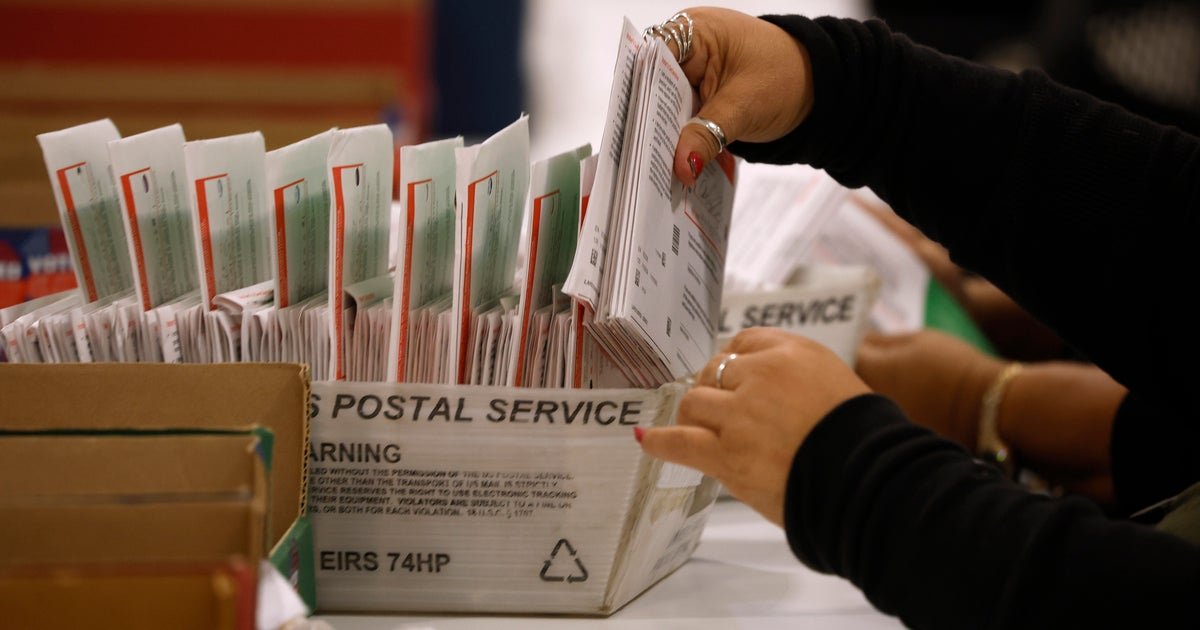
The final rule issued by the Postal Service requires states and localities to meet design requirements for mail ballots, including unique barcodes. They must also use an online portal to submit information about residents who will vote by mail, including their names, addresses and individualized barcodes.
Those voters will be enrolled with the Postal Service and included on state-specific “Mail-In and Absentee Participation Lists.”
The rule requires postal workers to review and verify ballot mail being sent to voters. Any ballot mailings that don’t comply with the requirements “will not be accepted and will be returned” to the election offices, the Postal Service said.
Over the weekend, the Trump administration for the third time asked the Supreme Court to intervene in the case. In filings with the court on Thursday, Solicitor General D. John Sauer asked the court to stay Talwani’s “baseless injunction,” arguing the new rule “is a lawful exercise of USPS’s express statutory authority to regulate the design of envelopes and the information needed about addressees.”