Vilnius, Lithuania — Russia struck Ukraine’s capital Kyiv overnight, bringing an end to a three-day pause in attacks by the two countries on each other’s capital cities as President Trump’s envoys Steve Witkoff and Jared Kushner visited the region to try and broker a peace deal.
At least two people were killed in the Russian strikes on Kyiv.
The neighboring Baltic countries, Estonia, Latvia and Lithuania — all NATO members — were watching carefully as the U.S. envoys continued their efforts to resolve the four-and-a-half-year war.
But as they watch and hope for peace, Lithuania and its neighbors have also long been preparing for the possibility that continental Europe’s first land war in three generations could spread to their doorsteps.
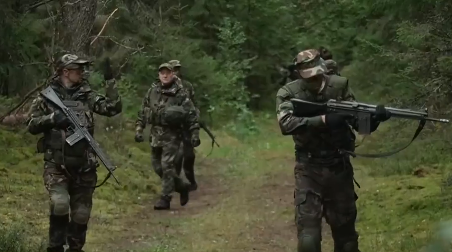
CBS News visited an ordinary high school in Vilnius where, in addition to math class, students were learning military-style survival skills. Along with the rest of their country, they’re preparing for the possibility of Russia launching an invasion.
“Today we’re working on survival training, and we’re going to learn about weapons later,” said Neda, a 15-year-old ninth grader.
If there is a crisis, Neda said she would likely put her first-aid knowledge to use and try to become a medic.
Lithuania, which has a population of less than 3 million, slightly smaller than greater Minneapolis, is also training up adult civilians.
CBS News 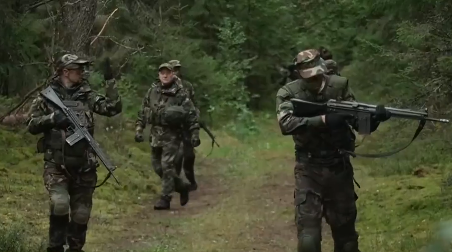
History professor Mindaugas Nefas has been learning weapons skills. He told CBS News the whole-of-society approach to national readiness sends an important message.
“I think it’s a good example, for Russia not to do anything against Lithuania,” because it shows not just the military, but all Lithuanians are “preparing to defend our country,” he said.
Taking on board lessons learned in Ukraine, Lithuania’s preparations include teaching ordinary people how to use drones — and how to shoot them down.
The nation’s small professional military is also embracing the new high-tech tools of war pioneered in Ukraine, including networks of sensors and drones known as the Eastern Flank Deterrence Initiative that, paired together, are intended to slow any theoretical Russian invasion to a crawl.
But old-school defenses still matter, too, including obstacles meant to stop tanks and command posts buried underground across the tiny nation.
Vilnius, Lithuania’s capital city, is less than 20 miles from the border with close Russian ally Belarus, which Vladimir Putin’s forces used as a launchpad for their ongoing full-scale invasion of Ukraine.
But despite that proximity, and Russia’s belligerence toward Ukraine’s NATO neighbors, Lithuania’s Minister of Defense Robertas Kaunas told CBS News he was confident.
He said his nation’s message to Russia was clear: “We don’t fear you. We understand who are you, and we don’t fear you.”
The former Soviet Union’s occupation of Lithuania only ended when the communist bloc collapsed in 1991, so it is still fresh in the nation’s collective memory.
“We are not afraid, because we remember our history,” said Kaunas. “We are in our home and we will protect our home.”
Until very recently, NATO planners were doubtful that Lithuania could be defended at all against a full Russian assault, given its size and location sandwiched between Russian and Russian-allied territory.
But the technological innovations of the war in Ukraine — and the resilience of the Ukrainian people — have inspired new hope in the Baltic state.