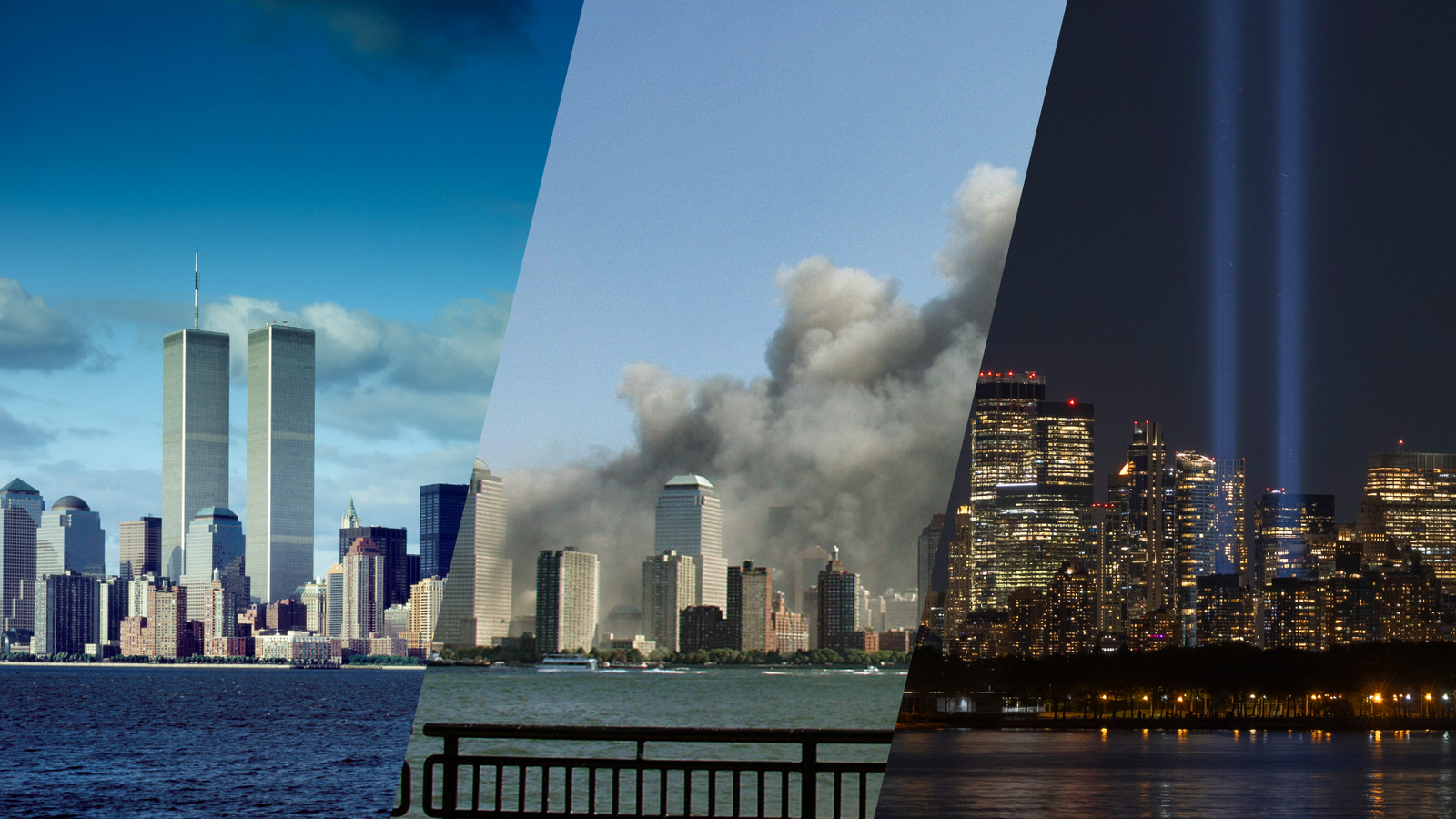
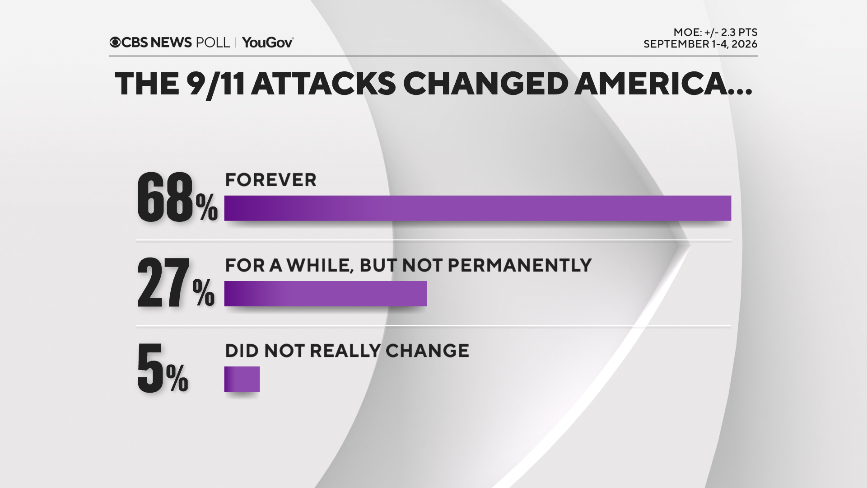
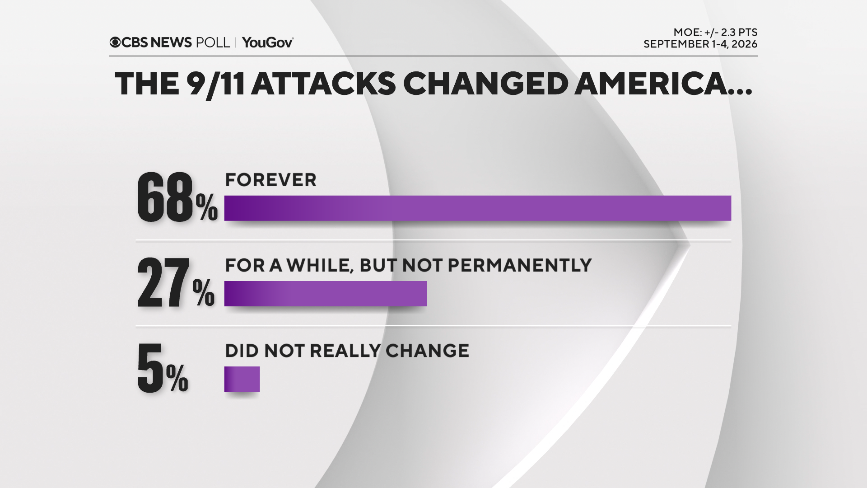
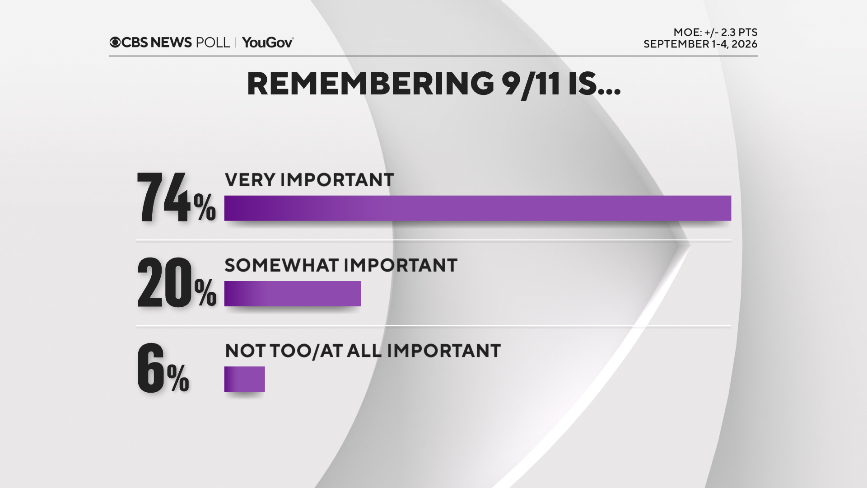
Twenty-five years later, Americans view the terror attacks of Sept. 11, 2001 as a defining event — one that fundamentally changed the country and that needs to be remembered.
As people look back, they see a different country today in some ways. Most feel there is less unity now than at the time of the attacks, though many think that the U.S. would unify as it did 25 years ago if another terror attack from overseas were to happen today.
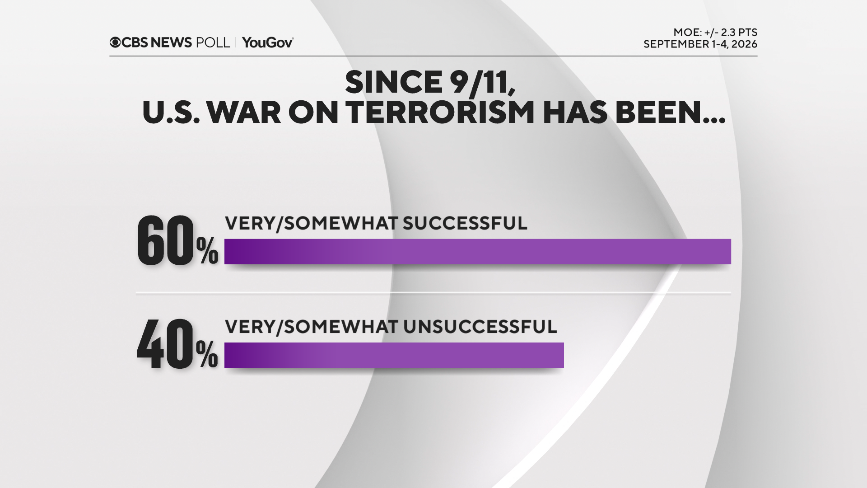
In response to the 9/11 attacks, the U.S. launched a military campaign often referred to as the “war on terrorism.” Today, most feel that campaign has been at least somewhat successful, although some uneasiness remains.
There are many today who weren’t born or were too young to remember 9/11. They have since come to learn about the attacks in school and from teachers and from family and friends, as well.
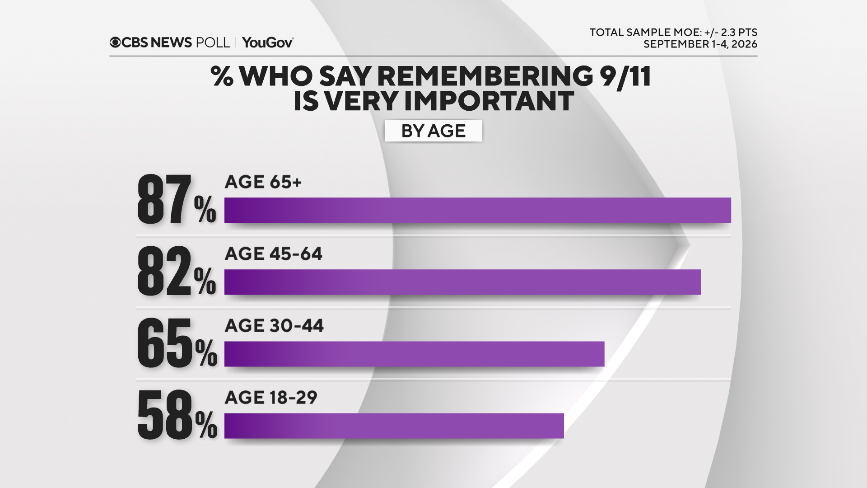
But even if they don’t remember it very well personally, most younger adults do recognize 9/11 as a consequential event. Most of them, like the public overall, believe those attacks changed the country forever, although it’s older Americans who especially feel it’s very important that people continue to remember that day.
Another indication of the event’s significance is that roughly a quarter of Americans say they have visited a 9/11 memorial or museum, including both younger and older people.
War on terrorism: Most see some success
In the 25 years since 9/11, most Americans feel U.S. actions to reduce terrorism have been at least somewhat successful, and many feel those efforts have made the U.S. safer.
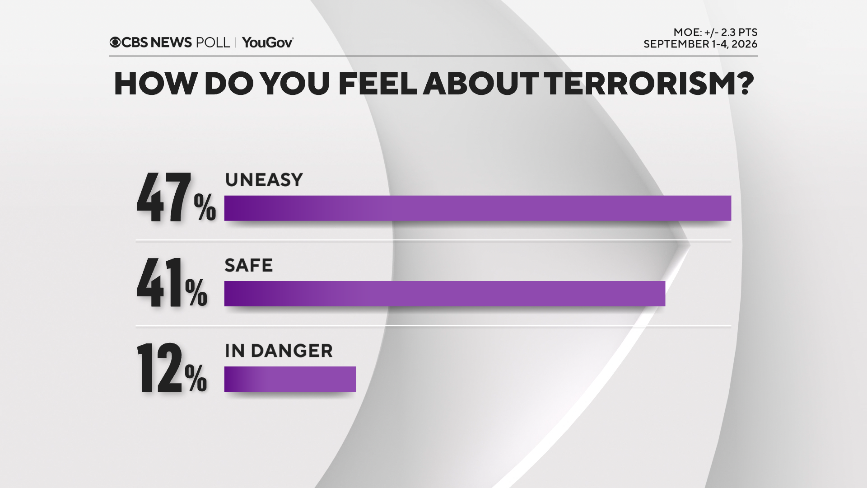
People are not without some concern, however. While few feel personally “in danger” from terrorism, many continue to feel “somewhat uneasy” — similar to how they felt five years ago when the country marked 20 years since the attacks.
People were on edge in the years immediately following the attacks — most believed another terrorist attack in the U.S. was likely to happen.
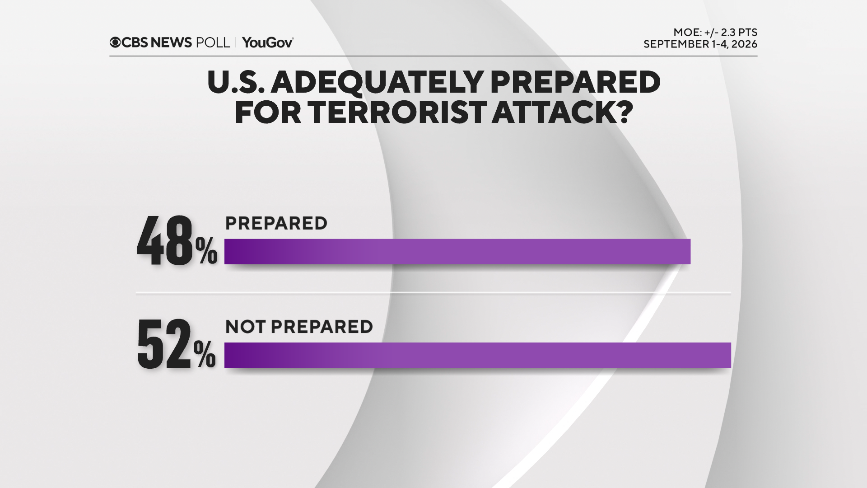
Today, the country is divided on whether the U.S. is adequately prepared to deal with a terrorist attack in the U.S. Opinions on this are driven partly by political partisanship, perhaps reflecting people’s views of the current administration. Most Republicans think the U.S. is prepared, while most Democrats and independents don’t think it is.
Sept. 11, 2001: Then and now
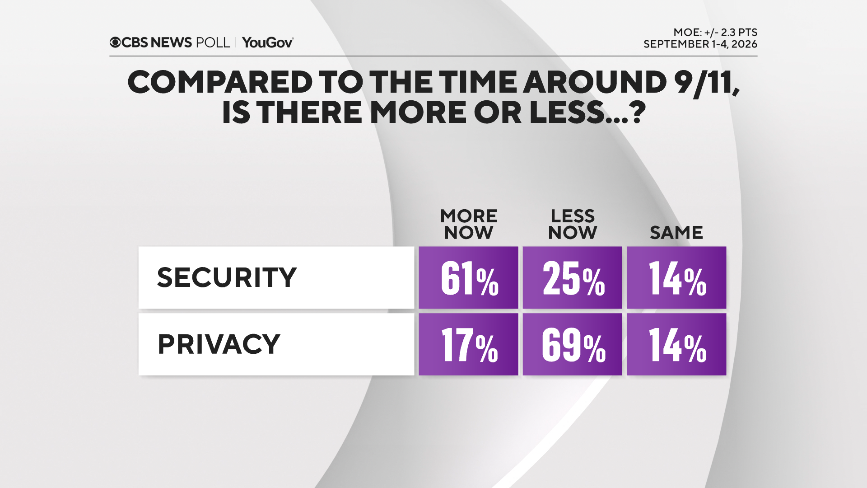
Americans do see changes in the U.S. since the attacks. Compared to that time, people feel there’s more security today, but feel there’s less privacy. Notably, they see less unity.
In the aftermath of 9/11, CBS News polling in 2001 found most Americans at the time critiqued security at airports, among other things, and the public supported the federal government taking on an increased role in airport security.
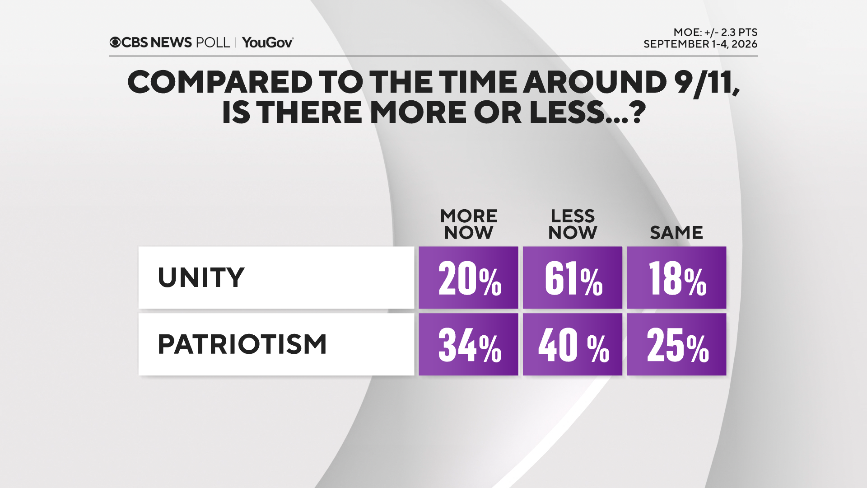
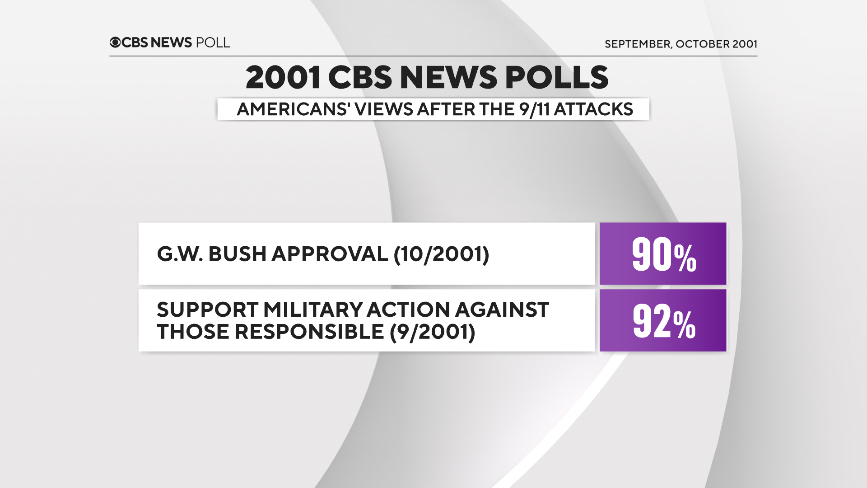
It has been said that the country became more unified after the 9/11 attacks. By one measure, Americans did rally behind their president. After the attacks, President George W. Bush’s job approval rating soared to 90% in early October 2001 — the highest approval rating for a sitting president to date in CBS News polling.
At the time, there was also near-universal support for U.S. military action against those responsible for the attacks, a measure of bipartisan unity that is rarely seen today on other issues, including military actions.
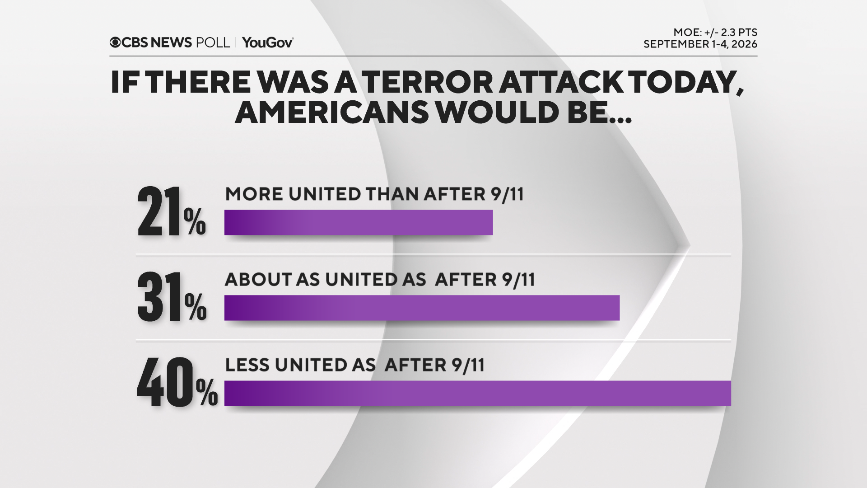
About half of the country believes that if a terror attack from overseas happened today, Americans would be just as united as they were after 9/11, or more so. But 40% feel the nation would not come together in the same way — particularly those who personally remember the 9/11 attacks very well.
This CBS News/YouGov survey was conducted with a nationally representative sample of 2,373 U.S. adults interviewed between September 1-4, 2026. The sample was weighted to be representative of adults nationwide according to gender, age, race, and education, based on the U.S. Census American Community Survey and Current Population Survey, as well as 2024 presidential vote. The margin of error is ±2.3 points.