Tehran says it will announce new Strait of Hormuz “exclusion zone”
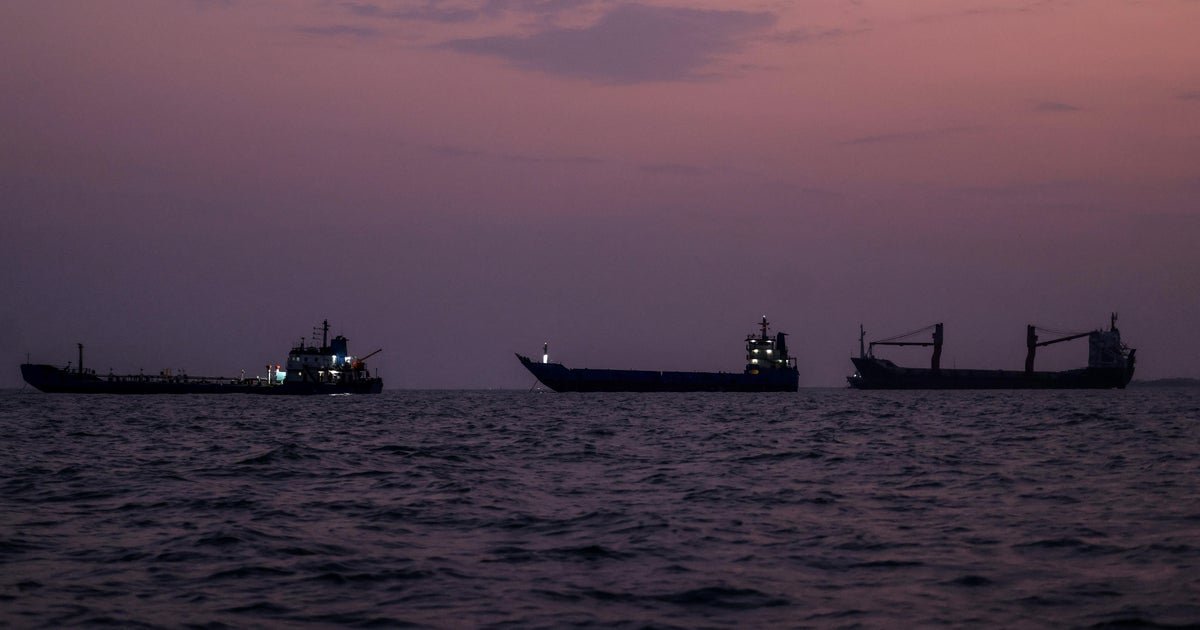
The new head of Iran’s Supreme National Security Council said Tehran plans to announce an “exclusion zone” outside the Strait of Hormuz aimed at vessels it believes are attempting to transit the waterway.
Mohsen Rezaei’s comments to Iran’s state broadcaster came with few details, a day after the U.S. struck three Iranian oil tankers in response to Tehran launching ballistic missiles at U.S. warships.
The new zone should be announced in the coming days and weeks and “will begin from the line of the U.S. naval blockade, extend toward the Strait of Hormuz, and from this side continue into the Persian Gulf,” Rezaei said without providing more details.
CBS/AP
Price of oil climbs, as regular gas averages nearly a dollar higher than last year’s Labor Day
The price of Brent crude, the international standard for oil, added another 67 cents, reaching $96.95 per barrel.
The average price of regular gas was $4.14 a gallon heading into the holiday, nearly a dollar higher than last year and well above the Labor Day weekend record of $3.82 from 2012, according to AAA motor club.
Prices shot up after the U.S. and Israel attacked Iran in February and have not settled down since. Crude oil traffic through the key Strait of Hormuz has plunged, and Iran has refused to reopen the waterway.
Iran threatens “intense” and “painful” response to U.S. strikes on oil tankers
The speaker of Iran’s Parliament, Mohammad Bagher Ghalibaf threatened on Sunday to launch swifter and more forceful responses to U.S. attacks, after Tehran targeted American warships in retaliation for US attacks on tankers.
“The Americans must have understood that the era of proportionate responses has come to an end,” said Ghalibaf in a speech carried by state media, adding that “any aggression against Iran’s interests and security will receive a faster, more intense and more painful response”.
U.S. Central Command said Saturday it had “permanently disabled” three Iranian oil tankers in the Persian Gulf and the Gulf of Oman.
“Let the message to the IRGC be clear: If you shoot at two of our ships, we will impose an even higher economic cost — taking out three of yours,” Adm. Brad Cooper, CENTCOM commander, said in a statement. “We will not hesitate to defend American forces, and if necessary, destroy Iran’s limited and exposed oil fleet.”