
The Trump administration has effectively shut down most of the Agency for Healthcare Research and Quality’s activities, closing the spigot on federal funding estimated to have saved thousands of lives and billions of dollars over the past 27 years by improving medical practice.
In a July 15 letter, the small Department of Health and Human Services agency known as AHRQ told researchers it was halting at least 104 grants, many aimed at improving patient safety. Although Congress appropriated $345 million for AHRQ for this fiscal year, the agency has spent less than $15 million on grants and hasn’t issued a new one in over a year, according to a review of federal records. About 75% of agency staffers have been fired or quit since President Donald Trump took office last year, according to HHS.
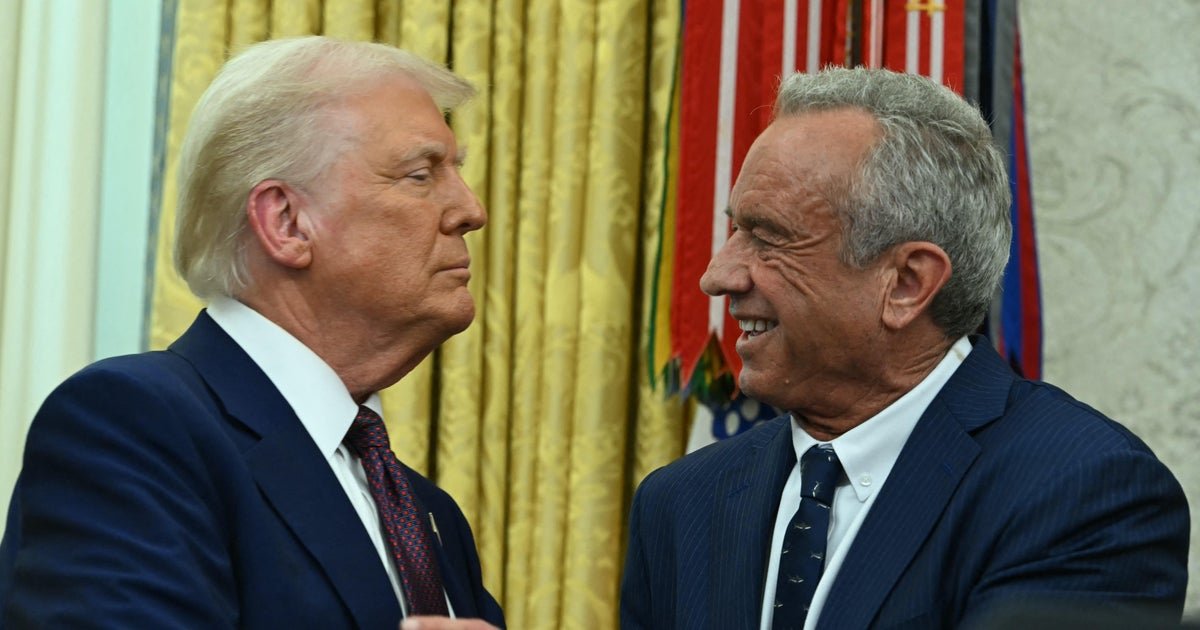
Trump and HHS Secretary Robert F. Kennedy Jr. have sought to slash the federal government’s investment in biomedical research, terminating grants and forcing scientists out of agencies across the health department. The gutting of AHRQ strikes some of the administration’s critics as particularly shortsighted, though, because of the agency’s noncontroversial focus on patient safety and its overall alignment with Trump and Kennedy’s “Make American Healthy Again” campaign against chronic illness.
“When you think about everything Americans hate about our health care system — that it costs too much, that you can’t get in to see a physician, that the treatment isn’t right, that the records contain wrong information — all that is what AHRQ studies,” said Aaron Carroll, chief executive of AcademyHealth, a health services research group that supports AHRQ’s work.
The Trump and Kennedy changes to AHRQ appear intended to be permanent. All of AHRQ’s grant managers have been fired, so there would be no way for AHRQ to directly oversee future grants, said Brent Sandmeyer, a former AHRQ program officer. “You wonder about this administration’s commitment to fighting fraud,” he said.
HHS spokesperson Emily Hilliard said AHRQ intended to establish a new “framework” for grants. She did not reply to requests for further details.
Researchers who received the letter from AHRQ Director Roger Klein expressed bewilderment because much of their work has the same objectives that Klein highlighted as the agency’s current priorities.
“AHRQ is the only federal agency that’s focused on safety and quality,” said Hardeep Singh, director of the Houston Methodist Safety, Quality and Well-Being Institute. His research, funded until recently by AHRQ, has aimed to reduce medical errors introduced by inadequate software design.
Klein stated that AHRQ’s research interests include patient safety, preventing antibiotic resistance, countering overmedication of children, promotion of digital health tools, and research “focused on scientifically valid, measurable health outcomes and solution-oriented approaches in health disparities research.”
KFF Health News examined about 20 of the canceled grants and found that nearly all had objectives that overlapped with the priorities Klein outlined.
“If there’s an ideology, lay it out clearly. But there’s no clarity whatsoever,” said Goutham Rao, chairman of the Department of Family Medicine and Community Health at Case Western Reserve University in Cleveland. AHRQ has funded Rao’s work for 16 years and ended three of his department’s current grants.
As an AHRQ-funded researcher since 2010, Rao has produced work that led to new approaches for common problems seen in doctors’ offices, such as how to respond to weight loss in aged and frail patients. His work has helped reduce diagnostic tests in the elderly and improve hypertension screening of children.
“The priorities they lay out in that letter make me think they didn’t even look at what we were doing,” said Andrea Shields, a University of Connecticut OB-GYN whose AHRQ grant was also eliminated.
Shields developed and implemented training of nonspecialist doctors, nurses, and emergency medical technicians to deal with high-risk pregnancies. Women in rural areas are two to three times as likely to die during pregnancy as those elsewhere in the U.S.
A long legacy
AHRQ-funded research has been key to improving patient safety, structuring medical information technology, and introducing the concept of patient-centered care into the health system.
The agency is perhaps best known for its work on curbing hospital infections. Practices introduced because of AHRQ-funded studies prevented an estimated 20,500 deaths and saved $7.7 billion in healthcare costs from 2014 to 2017 alone, according to an analysis the agency conducted.
Teams at Harvard, Yale, and Rand in Santa Monica, California, developed a national standardized patient survey that HHS and healthcare systems use to refine healthcare practices with patient perspectives in mind, said Susan Edgman-Levitan, who has worked on that project since 1995 but recently lost her funding. She and her colleagues developed a definition of patient- and family-centered care that became a pillar of healthcare evaluation. The Centers for Medicare & Medicaid Services bases some of its payments on hospital surveys her group designed.
AHRQ researchers working on five-year grants typically get letters confirming their award in the summer or fall each year. Last year, Edgman-Levitan said, they got no word and no money. They wrote a letter to Klein but heard “not a peep” in response. Then, around 5 p.m. on July 15, an emailed termination notice arrived. The $1 million annual grant was for developing hospital surveys regarding childbirth and behavioral health services.
“My salary is gone. The salaries of all my research assistants, survey scientists, all lost. It’s terrible,” she said. “But I’m near the end of my career. The salary piece is not as devastating as the loss of what I view as really critical work and support for improving childbirth care and patient care in general.”
Klein, a molecular pathologist and Federalist Society-affiliated lawyer who took over the agency last July, has told staff that artificial intelligence can replace much of the evidence review and analytics done by AHRQ scientists, according to one current and one recently departed AHRQ official, whom KFF Health News agreed not to name to protect their jobs.
Such comments align with a report issued July 22 by White House science adviser Michael Kratsios, which said the government should “refocus support on individual scientists rather than legacy institutions, diversify funding mechanisms beyond slow consensus peer review,” and build the future with AI.
Klein did not respond to requests for comment. HHS spokesperson Hilliard also did not respond to specific questions about AHRQ’s plans or objectives.
Of the July 15 letter, Hilliard said: “Under statute, the AHRQ director must determine whether continuation funding is in the best interest of the federal government. AHRQ determined that certain non-competing continuation grants and jointly funded grants would not receive continuation awards.”
Hilliard said the grants were not terminated but rather were “not awarded continued funding.” This subtlety may have legal relevance for grantees planning to sue the administration, said Lauren Adams, a spokesperson for AcademyHealth.
“None of it makes any sense”
The Society for General Internal Medicine sued Klein and health secretary Kennedy last August over AHRQ’s failure to issue new grants. The lawsuit, which is pending, argues that failure to use most of AHRQ’s $369 million fiscal 2025 appropriation is illegal under a 1974 law intended to protect Congress’ power of the purse.
“None of it makes any sense,” said Nora Becker, a pediatrician at Michigan Medicine who lost the last two years of a five-year training and research grant on the relationship between financial difficulty and health outcomes. “The MAHA agenda could fit nicely with AHRQ priorities — we focus on chronic conditions, the quality of care, deprescribing, identifying harms of overmedication.”
She added: “To be honest, it doesn’t feel like any of this is being done in good faith. Part of me just wonders whether the goal was to destroy AHRQ. But I don’t know why AHRQ was such a target.”
Hilliard said that “the Trump Administration remains committed to the responsible stewardship of taxpayer dollars.”
In March 2025, Kennedy announced plans to fold AHRQ and parts of other HHS agencies into a new Office of Strategy. But Congress has shown no interest in the reorganization plan.
Klein hasn’t publicly commented about AHRQ’s overall objectives or plans since attacking previous AHRQ activities in a Newsweek opinion piece he co-wrote with an assistant that was published in January.
The article argued that under previous administrations, “scientific neutrality” had given way to “moral signaling” on diversity and equity. But now, Klein wrote, the Trump administration had righted AHRQ’s focus to “generate evidence that improves how health care is delivered.”
Klein has held no agency-wide meetings, has declined to meet with AHRQ supporters and grantees, and never announced a blueprint for the agency, according to current and former AHRQ employees. They said he is infrequently seen at the agency’s Rockville, Maryland, offices.
Staff members currently number 74, Hilliard said, down from about 300 in early 2025. The agency has halted about $100 million in this year’s commitments to grantees, a substantial chunk of its congressionally approved budget, according to a tabulation by AcademyHealth.
“These claims about Dr. Klein are pointedly false,” Hilliard said. “AHRQ is strengthening its grants process, reviewing agency work for quality, aligning with its statutory mission, and focusing on research to improve patient outcomes.”
She did not respond to a request for specific information on grant funding.
AHRQ continues to conduct some data collection and has kept up its Medical Expenditure Panel Survey, which measures how Americans use and pay for medical care, insurance, and out-of-pocket costs. However, publication has slowed to a trickle because Klein reviews every piece of data or report issued by the agency, said Elisabeth Kato, who worked at AHRQ for 16 years before resigning from a senior position in April.
AHRQ also runs the U.S. Preventive Services Task Force, a panel whose assessments on the value of drugs, vaccines, and procedures determine whether insurers are required to cover them.
The task force hasn’t met since March 2025. Trump fired two of the group’s senior leaders and currently has only six of the 16 members it had when he took office. “The longer they don’t meet, the longer we’re losing connection between evidence and coverage,” said Sandmeyer, one of the former AHRQ officials.
A meeting of the task force is set for the end of August, Hilliard said.
Pediatrician Courtney Mangus lost her grant in the middle of a five-year project aimed at reducing cancers by using a software tool to help reduce the number of CT scans done on children who come to emergency rooms with abdominal pain. In rural and community emergency rooms, children are much more likely to be scanned for appendicitis than they are in better-equipped children’s pediatric hospitals. Each scan contributes to cancer risk.
Mangus wonders how AHRQ’s disappearance as a funding source will affect her career. “I need some funding to finish what I’ve started,” she said, “so then I could apply for bigger awards that can move the needle on this issue.”
She has applied to smaller foundations and may seek support from the National Institutes of Health, but her work was “really best suited for AHRQ.”
As NIH, AHRQ, and other federal funders have cut grants over the past two years, new applications have flooded private biomedical foundations.
“It’s baffling to me why AHRQ refuses to fund research that has legally been appropriated by Congress and signed by the president,” Carroll said. “I don’t understand why everyone else in government isn’t going out of their mind about this.”
KFF Health News is a national newsroom that produces in-depth journalism about health issues and is one of the core operating programs at KFF — the independent source for health policy research, polling, and journalism.


