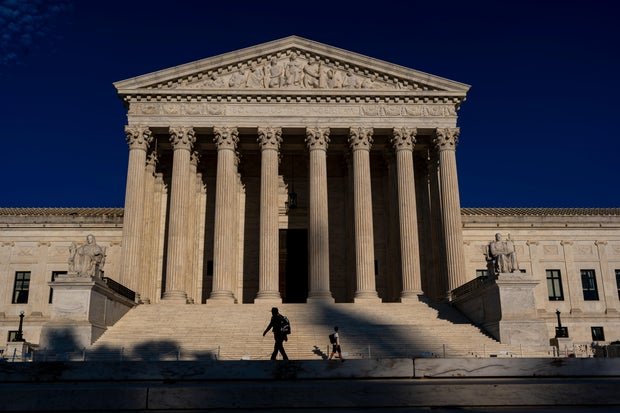

Author Michael Lewis believes most Americans do not know that civil servants in the federal government take an oath of office. “I didn’t know,” he said. “I don’t think I knew even after I’d written a whole book about them. So, I assume not.”
“I, ___, do solemnly swear (or affirm) that I will support and defend the Constitution of the United States against all enemies, foreign and domestic; that I will bear true faith and allegiance to the same; that I take this obligation freely, without any mental reservation or purpose of evasion; and that I will well and faithfully discharge the duties of the office on which I am about to enter. So help me God.”
– Civil Service Oath of Office, U.S. Code § 3331.
CBS News 
For Lewis, pursuing knowledge is a calling. He has conjured up bestsellers and box-office hits out of deep-dives into data, from Wall Street (“The Big Short,” “Liar’s Poker”), to the NFL (“The Blind Side”), to baseball (“Moneyball”). Lewis likes to challenge assumptions, including those about the occupants of Washington’s federal buildings – government workers, sometimes derided as faceless bureaucrats. “That’s the stereotype,” Lewis said.
He believes people who distrust government don’t understand what it does: “They don’t like the government, or they think they don’t like the government. They think they don’t trust the government, but in fact they just don’t know how much they trust the government. They take the trust for granted. Every time they drink water out of the tap, or fly on an airplane, or eat food, or put dollars in their bank account, they’re trusting the government.
“And I thought, who are these people? We live in a society that is largely focused on personal ambition. It’s a free market capitalist society and people are really interested in money and fame,” he said. “To find people who are some of the most valuable people on the planet, who are interested in neither money nor fame, but have found some other purpose, who have a sense of public spirit, who are not selfish – and the government is a place where you can really do stuff that makes a difference, and it attracts these people. And thank God for them.”
W.W. Norton & Co. 
Lewis’ latest book, “Blockers: Rebels in the Deep State” (to be published Oct. 6), profiles workers confronted by DOGE – the Department of Government Efficiency, championed by President Trump and his mega-donor, billionaire Elon Musk.
Musk promised massive savings of “at least $2 trillion” from cutting government, and targeted government workers he called “blockers.”
“It’s an insult,” Lewis said. “A ‘blocker’ is a word that Elon Musk likes to toss around. He told all the 20-year-olds who came to work for him in DOGE to go find the ‘blockers,’ the people who would get in the way of doing what he wanted to do, and get rid of them.”
SAUL LOEB/AFP via Getty Images 
“I was blocking people from violating the law”
A central character in “Blockers” is Kathleen Walters. “I mean, if you want to say I was blocking people from violating the law, then I guess that’s a fair term,” she said.
Once a top executive in the Internal Revenue Service, Walters was responsible for protecting taxpayers’ personal information. She said, of President Trump’s executive order creating DOGE, “Executive orders are normal. And as long as they’re lawful, our job is to administer them.”
So, she wasn’t trying to block executive orders? “No, no, no,” Walters said. “I’ve been in the government for every administration since Bush, so I’ve worked for them all, and that’s normal.”
But after DOGE’s arrival, nothing seemed normal to Walters. She says Immigration and Customs Enforcement (ICE) began asking for information on undocumented workers who had been paying taxes to the U.S. Treasury. ICE would later specify in a memo they were only seeking information on individuals under criminal investigation. “They came out and said, ‘Well, we’re thinking of approximately, probably seven million [people],'” Walter said. “And I questioned in my head, I did not believe there could be seven million active criminal investigations going on.”
Walters says she resisted for months, and ultimately she resigned. “After I left, the IRS handed over the data,” she said.
The Treasury Department’s Inspector General has since found that ICE did not meet “safeguarding standards”; and federal courts have ruled that privacy rights were violated. [The Trump administration continues to argue it has acted within the law.]
CBS News 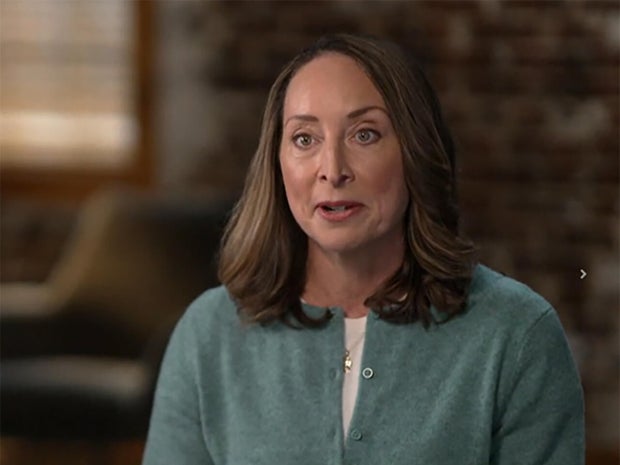
Walters said, after trying to stop what she saw as a violation of the law, she left the IRS when she felt she could not stop it. Asked how tough of a choice that was for her, she replied, “In one respect, it was a simple choice. But simple isn’t easy always, and it was challenging, because I’d been there almost 20 years. I was 23 days shy of qualifying for early retirement. And I’m a mom to an elementary-aged child.”
Walters described her daughter’s reaction to watching her mother struggle: “Well, she’s a smart little kid, and I told her high level that I was asked to violate the law and I couldn’t do it, so I left. And then later that week, I went into my bedroom and there was a $10 bill on my shelf. And she said, ‘Mom, I just wanna help out at home.’ And she wouldn’t let me give it back, so I had to sneak it – hopefully she doesn’t see this! – had to sneak it into her piggy bank again. And so, I know she’s proud and she understands why I did what I did. And so again, I can sleep at night well knowing that my decision was the right one even though it was hard.”
As for DOGE, there is intense debate over its impact. The Government Accountability Office, an independent nonpartisan federal watchdog, found in an audit that DOGE overstated its savings or could not verify them, and fell far short of its goals.
The Trump administration’s Office of Personnel Management (OPM), which manages the federal workforce, praised DOGE in a statement to “Sunday Morning”:
“The President is committed to stewardship of taxpayer dollars in delivering services to the American people,” said Scott Kupor, director, Office of Personnel Management. “DOGE was a catalyst for these reforms that are now being institutionalized through the Vice President’s leadership on fraud, waste and abuse and OPM’s and OMB’s cross-government focus on organizational efficiency.”
But for Michael Lewis, this story is about more than numbers or budgets; it’s about people. And he would like people who are skeptical of government to read this book: “Oh my God, yes. That would be my favorite reader.”
Asked why some people might not see government as he sees it, Lewis replied, “Because they haven’t spent the time to get to know it. This isn’t knowledge I was born with. If we don’t see that these people who don’t make any money, and aren’t famous, and don’t like to talk about what they do but are working their tails off for us have value for our society, we’re in trouble. And that’s the message that I’m trying to get across.”
Story produced by Ed Forgotson. Editor: Jason Schmidt.
For more info: