On Tuesday at the Make America Healthy Again summit, Health and Human Services Secretary Robert F. Kennedy Jr. said that artificial intelligence can give patients “a second opinion that is much better informed than any doctor in the country.” He said it has the power to “free us from medical tyranny.” He also said public officials who tell Americans to defer to experts will “never ever again” be able to dominate them: “If somebody tells you that a vaccine will prevent transmission and infection, or you need to take it to protect your grandmother, A.I. may say it actually doesn’t do that.”
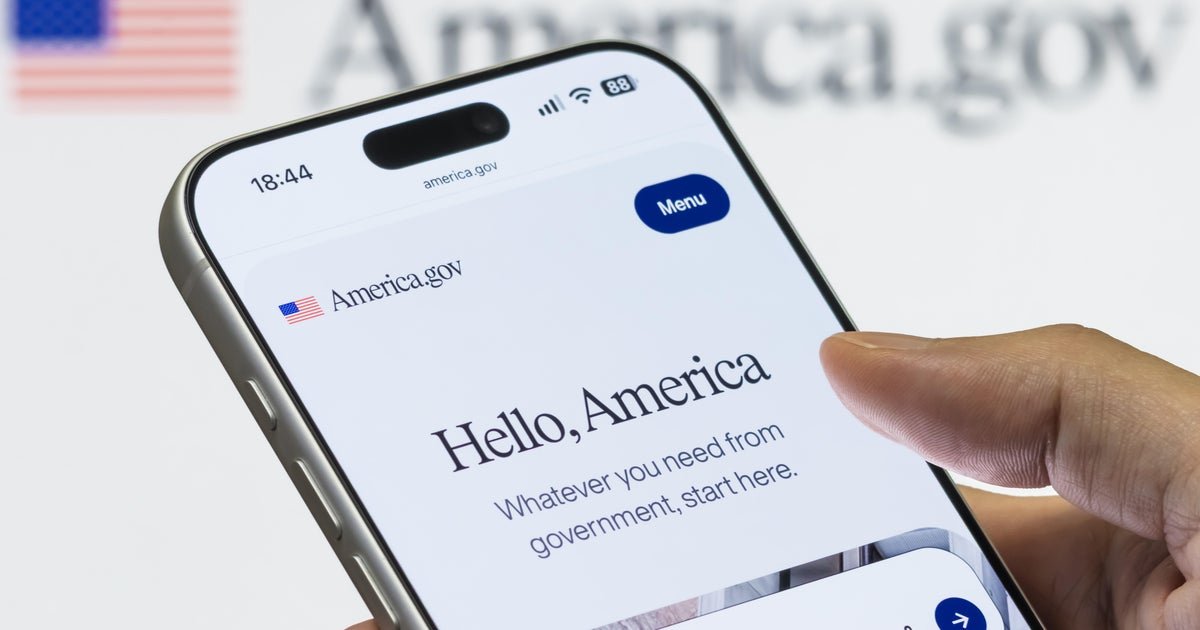
The same day, the White House launched America.gov. It promises “simple answers only from official government sources.” Its health answers cite agencies Kennedy runs: the Centers for Disease Control and Prevention, the Food and Drug Administration, the National Institutes of Health, and the Centers for Medicare & Medicaid Services.
So I asked America.gov for a second opinion. I sent it 37 questions. The answers were often complicated, because the official sources no longer agree with each other.
What is America.gov?
An executive order signed Sept. 29 makes the site “a single digital point of entry” for federal services. The White House’s National Design Studio built it, the General Services Administration runs it, and it’s powered by Gemini and xAI’s Grok, drawing on about 29,000 government websites. But when I asked which AI it runs on, it said, “I do not share details about the underlying software.”
What does it say about vaccines and autism?
I started with autism and vaccines. In November 2025, Kennedy ordered a change to a CDC page. The page now says, “The claim ‘vaccines do not cause autism’ is not an evidence-based claim.” Yet other CDC pages still say studies find no link.
The chatbot didn’t pick a side. Since both pages are official, it opened with “CDC pages currently do not all say the same thing.” It quoted both versions and pointed to health officials in New York and Colorado, who call the new wording inconsistent with the research. Then it said, “I cannot verify a single federal conclusion that covers every vaccine.”
How does it decide which page wins?
I asked. It said it prefers “the agency that runs the program for a final determination.” After that, it prefers “the most recent official source.” The rule sounds sensible, because agencies usually update a page when the science or the policy changes. It fails when a court has paused the newest page, as happened with the hepatitis B shot.
Last December, CDC dropped its hepatitis B shot recommendation for every newborn. But in March, a federal judge paused that change and restored the recommendation for every newborn. The government has appealed.
I asked about the newborn hepatitis B shot in three different ways. Because the December page is the newest, the chatbot went with that, but that’s wrong. It is still recommended that a newborn get a hepatitis B shot.
The chatbot never mentioned the court order
In June 2025, Kennedy fired all 17 members of the CDC’s vaccine advisory committee, calling the panel “little more than a rubber stamp for any vaccine.” He named his own replacements. That December, his appointees voted 8 to 3 to end the recommendation of a hepatitis B shot at birth for every newborn.
On March 16, Judge Brian E. Murphy of the federal court in Massachusetts paused that vote. He found that Kennedy’s new committee likely broke a federal law requiring balanced advisory panels. So his order also paused appointments for the new members and a January overhaul of the childhood schedule.
The American Academy of Pediatrics and other groups had sued. His order also paused the new committee members’ appointments and a January overhaul of the childhood schedule. The earlier schedule, including the birth dose, went back into effect.
I asked America.gov about the newborn shot in three different ways. Each time, the chatbot told me to prefer the December 2025 CDC and HHS fact sheets, never mentioning the court order.
The chatbot said CDC had announced a new “three-category” schedule in January. The court has also paused the January schedule.
What else did it get wrong?
On insulin, it said, “most Part D plans cap insulin at $35 for a month’s supply (participating plans; check your formulary).” “Participating plans” describes a voluntary Medicare pilot that started in 2021. About 38% of Part D plans joined it, according to KFF. In the 2022 Inflation Reduction Act, Congress extended the $35 cap to every Part D plan. The chatbot described the pilot and left out the law that replaced it.
Accurate answers on raw milk, smoking, more
When I typed chest pain and a numb left arm, its first words were “Call 9-1-1 now.” For a toddler who swallowed blood pressure pills, it put Poison Control’s number first. It walked me through Medicare Part D enrollment windows and Medicaid appeals. Its Spanish answers matched its English ones. It said raw milk isn’t healthier than pasteurized milk and that smoking causes lung cancer.
The White House responds
CBS News asked the White House and HHS for comment on the chatbot’s answers. A White House official responded, “America.gov will continue to be updated to provide Americans the most accurate and reliable federal information and resources.”
Should people use America.gov?
Use it to find forms and deadlines. Take your health questions to your healthcare provider.
This article was originally published in Dr. Céline Gounder’s “Underlying Conditions” newsletter on Substack. Read more and subscribe here.